
Kingdom Life Academy: A Christian Micro-School Preparing Students for Real Life
For many low-income families, finding the right school can mean the difference between a child dropping out — or discovering their purpose.
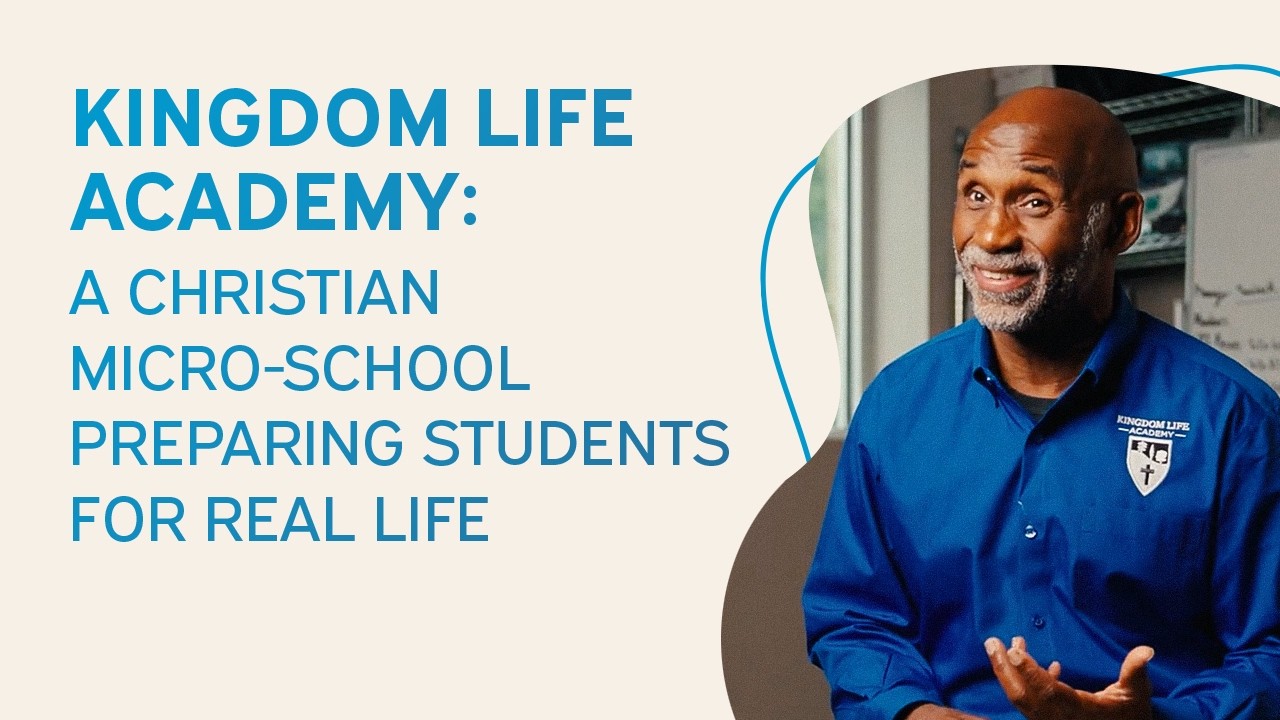

For many low-income families, finding the right school can mean the difference between a child dropping out — or discovering their purpose.
At Kingdom Life Academy (KLA), a Christian micro-school founded by Joel Enge, students receive more than an education. They receive hands-on, experiential learning that prepares them for real life — from workforce readiness to personal responsibility.
A Christian Micro-School Serving Students Who Need a Different Approach
Joel Enge began his career teaching in public schools, first in fifth grade and later in middle school. Over time, he noticed a troubling pattern.
“I saw boys really dropping out of school in their hearts,” Joel explains. “They were physically present but disengaged.”
In 2013, he founded Kingdom Life Academy to serve students — both boys and girls — who were struggling in traditional public-school environments and needed a more personalized, hands-on education model.
As a Christian micro-school, KLA focuses on small class sizes, mentorship, and experiential learning. The school primarily serves low-income families seeking a safe, structured environment where their children can grow academically, spiritually, and practically.
Experiential Learning That Connects Academics to Real Life
At Kingdom Life Academy, learning looks different. Students can be found preparing lunch in the kitchen — applying math concepts like ratios and proportions through recipes — working in the garden planting green beans, squash, and cantaloupe, and practicing responsibility through daily tasks.
“We’re connecting academics with skills,” Joel says. “When you connect them, the academics make sense.”
This experiential learning model ensures that students don’t just memorize information — they understand how to apply it. In a world where many students struggle to see the relevance of school, Kingdom Life Academy bridges the gap between classroom learning and real-world application.

A Student’s Story: From Struggling to Thriving
For one student, transferring to Kingdom Life Academy wasn’t easy at first. But once they found their footing, everything changed.

“As I started fitting in with the other students and teachers, I really loved it. I’ve learned things here I would never learn in a normal school.”
— KLA Student
Now, that same student describes KLA as a school that prepares young men and women for adulthood — from paying bills to finding a job. Stories like this highlight why school choice matters. When families are empowered to choose a school that aligns with their child’s needs, students are far more likely to succeed.
How the AFC Scholarship Fund Expands Educational Opportunity
The AFC Scholarship Fund is being built with a long-term vision: to help expand access to high-quality educational options for families who otherwise could not afford them. Schools like Kingdom Life Academy demonstrate what’s possible when students receive personalized instruction, real-world skill development, and strong mentorship.
Transforming Lives Through His Kingdom
Kingdom Life Academy’s vision statement says it simply: transforming lives through His kingdom. Joel’s dream is that every student who leaves KLA can navigate their personal life confidently, enter the workforce prepared, take their rightful place in the marketplace, and contribute meaningfully to their community.
Schools like Kingdom Life Academy show what education can look like when it is rooted in purpose, responsibility, and real-world preparation. And as the AFC Scholarship Fund continues to build toward expanding access, more students will have the opportunity to experience that kind of transformation.
Every child deserves the chance to attend a school that prepares them not just for graduation — but for life. The Education Freedom Tax Credit, launching January 1, 2027, will help make that possible for more families. Eligible donors will receive a dollar-for-dollar federal tax credit of up to $1,700 when they contribute to a qualifying K–12 scholarship organization. Any amount above $1,700 qualifies as a standard 501(c)(3) charitable deduction. There is no cap on how much you can give.