
When School Broke Her Confidence, School Choice Helped Rebuild It
One Oklahoma mom’s emotional journey finding the right school for her daughter with dyslexia and ADHD — and how school choice made all the difference.
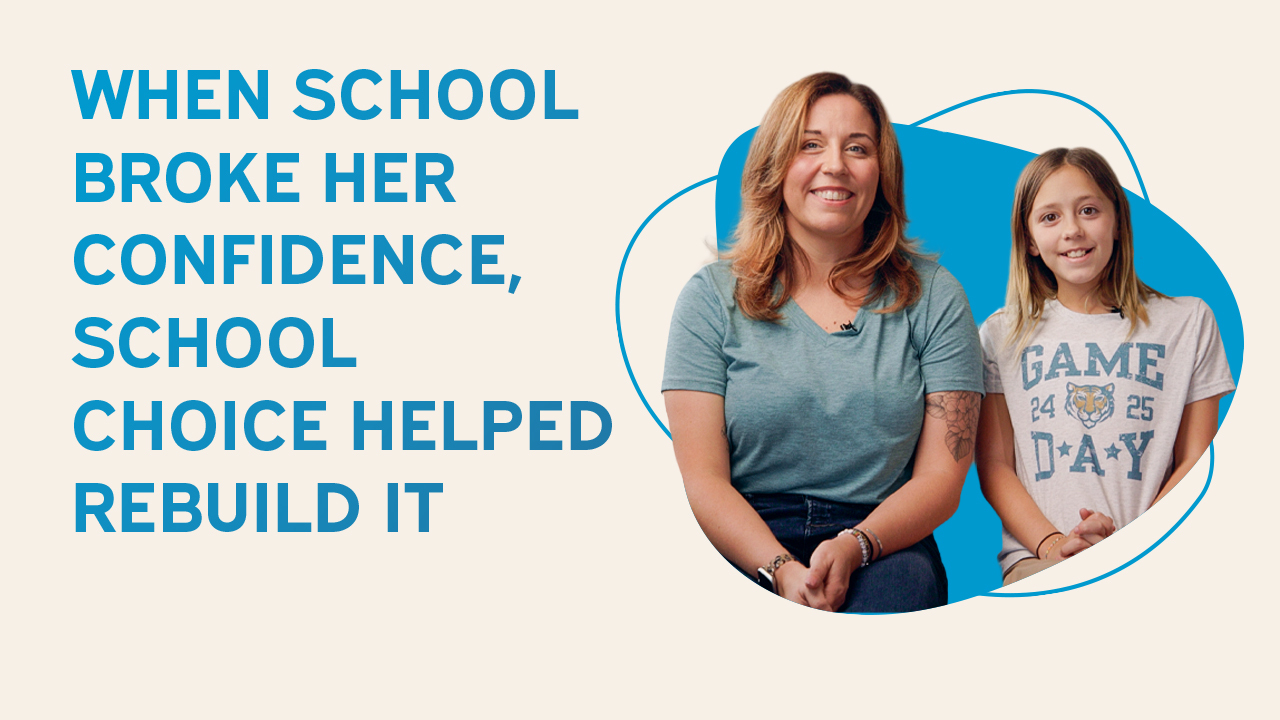

When her daughter started falling behind, one Oklahoma mom refused to accept it as the end of the story — and the school she found changed everything.
When Austin’s mom thinks about where her daughter might be today if they hadn’t found a different school, the emotions still come quickly.
“I get emotional just thinking about where she would be right now,” she says. “Had we not taken the steps to pursue finding the opportunity to bring her here.”
Austin started kindergarten in Texas before her family later moved to Oklahoma. As the years went on, learning became more difficult — especially reading. Her family began to suspect she might be facing dyslexia and ADHD, but even with that awareness, the right path forward wasn’t clear.
When Families Feel They Have No School Options
The academic struggles soon became emotional ones as well. School became something Austin dreaded.
“She didn’t want to go to school most days,” her mom recalls. “She cried.”
One moment still stays with her. Austin came home after a classmate asked if she was “stupid” because she couldn’t sound out a word correctly. Watching her daughter lose confidence was heartbreaking.
Austin’s mom knew something had to change. But like many parents, the options felt limited.
“The first thought for me was that we couldn’t afford private school,” she said. “That would just never be an option.”
For many families, the search ends there. Even when parents know their child needs a different learning environment, the cost of private education can make that opportunity feel out of reach.
Still, Austin’s parents couldn’t ignore what they were seeing. They watched their daughter struggle academically and emotionally, and they knew staying in the same environment wasn’t working. They began researching other options — and eventually discovered that a scholarship program could make private school a real possibility.
That search eventually led them to Trinity School.

When the Right School Meets the Right Student
When Austin arrived at Trinity, the difference was immediate. The school recognized that students learn in different ways and worked to meet her where she was.
When she started fifth grade, testing showed her reading comprehension at a third-grade level. But that changed quickly once she was in an environment with teaching methods designed for how she learns.
Within one semester, her reading comprehension jumped to a seventh-grade level.
“Being able to get daily access to being taught in the way that she needed to be taught was life-changing for us,” her mom said.
Austin felt the difference too. “My favorite part about Trinity is how many kind people and teachers there are here,” she says. “They’ll listen to you until you understand, and they’ll help any way possible.”
The Confidence That School Choice Can Restore
The academic gains were substantial. But it was the personal changes that made the transformation remarkable.

“The main difference I notice after coming to Trinity is her confidence level.”
— Austin’s mom
Austin no longer sees herself as the student who struggled to keep up. Instead, she’s gaining confidence and rediscovering a love of learning in an environment that supports her.
“No two children are the same,” her mom says. “Each child deserves access to the education that they need.”
Austin’s story is one example of what can happen when families have access to the educational environment that works best for their child.
Help Expand Opportunity for More Students
That’s why the Education Freedom Tax Credit (EFTC), launching in 2027, is so important. The program will expand scholarship opportunities so more families can choose the schools that meet their children’s needs — regardless of their zip code or income level.
The EFTC allows eligible donors to receive a dollar-for-dollar federal tax credit of up to $1,700 when they contribute to a qualifying K–12 scholarship organization. Any amount donated above $1,700 is treated as a standard 501(c)(3) charitable deduction. There is no cap on how much you can give — and every dollar goes toward funding scholarships for students like Austin.
Find out if you qualify for the Education Freedom Tax Credit.
Use our free eligibility calculator to see what your contribution could mean for families like Austin’s.
Calculate My Credit →Get notified when the Education Freedom Tax Credit launches so you don’t miss the opportunity to support K–12 students while benefiting from a federal tax credit.
What’s Next: Contributions to a qualifying scholarship granting organization (SGO) can be made at any point during the 2027 calendar year. When your 2027 federal return is filed, you will claim the Education Freedom Tax Credit and it will be applied directly against your federal tax liability.
Disclaimer: This article is for informational and educational purposes only and does not constitute tax, legal, or financial advice. Tax laws are subject to change. Please consult a qualified tax professional regarding your individual circumstances. The Education Freedom Tax Credit is effective January 1, 2027. Contribution limits and program details are subject to IRS guidance and final program rules.