
A Mother’s Instinct Led to School Choice—And More Families Will Soon Have That Opportunity
She didn’t have a roadmap. She had a mother’s instinct—and school choice gave her the power to act on it.
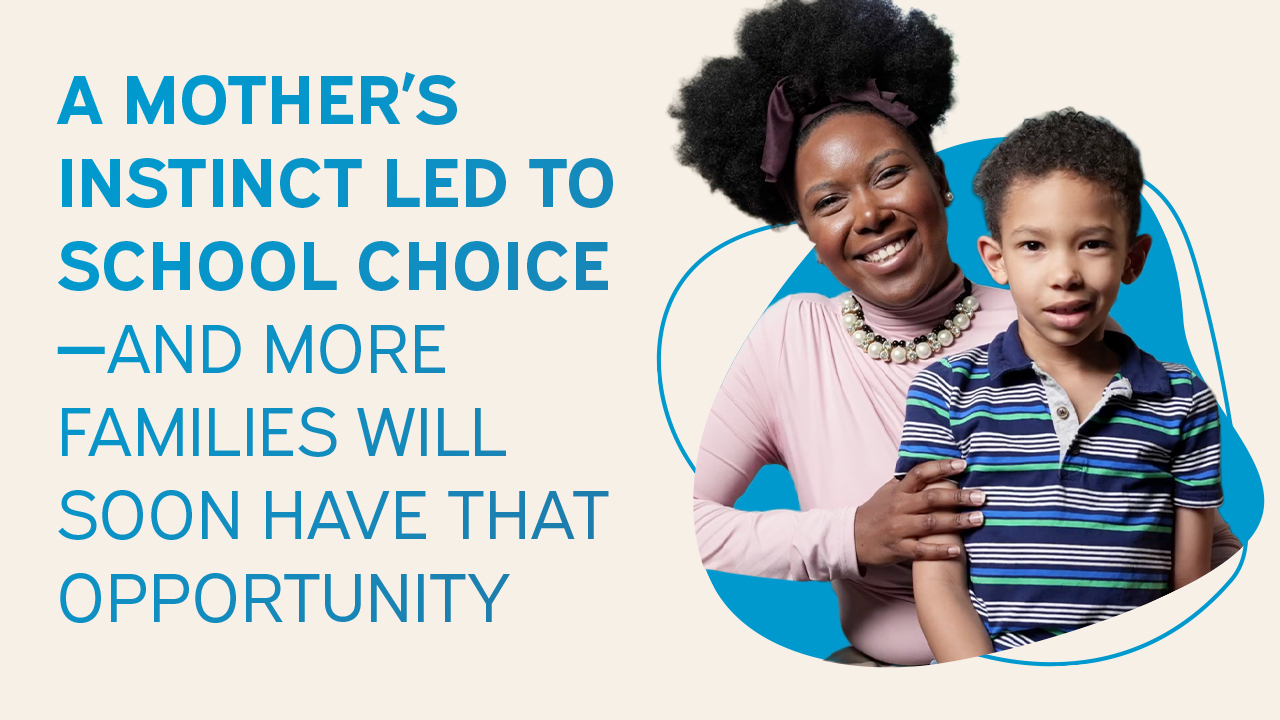

One mother’s belief—and the power of school choice—gave her son the environment he needed to connect, grow, and become exactly who he’s meant to be.
Most parents imagine a path for their child long before the first day of school. It’s a familiar picture. Backpacks, classrooms, friendships, a future that mirrors their own.
But sometimes, a child quietly rewrites that plan.
For one mother, that moment came slowly, first as a whisper of concern, then as something she could no longer ignore. At first, she told herself everything was fine. Children develop at their own pace, and there’s no rush.
But by the time her son, Donovan, turned three, she began noticing the gap between him and other children his age. They were talking, connecting, expressing themselves. He wasn’t, at least not in the same way.
And that changed everything.
“I trusted my maternal instincts. I’m not comfortable sending him to a school where he can’t even tell me what his day is like.”
— Donovan’s mother
That instinct was raw, protective, and unshakable. It became her guide.
When the Traditional Path Doesn’t Fit
Like many parents, she assumed her child would follow a traditional path: daycare, kindergarten, then onward through the system she knew. School wasn’t something you questioned. It was just what you did.
But her son didn’t fit neatly into that box.
And she realized something many parents eventually face: the system isn’t designed for every child.
Trying to force a child into an environment where they can’t communicate, can’t be understood, and can’t thrive isn’t just frustrating. It’s a disservice.
“We’re really doing our children a disservice by trying to jam them into boxes that they don’t belong in.”
That realization opened a door she never expected to walk through.
Discovering School Choice and a New Future
School choice wasn’t something she had planned for. Words like homeschooling, microschools, co-ops, and specialized learning environments were completely new to her.
But when your child needs something different, you start searching.
That’s where opportunities like K–12 scholarships and future programs like the Education Freedom Tax Credit become life-changing. These programs empower families to choose learning environments that actually meet their child’s needs, whether that’s a specialized school, a smaller setting, or a program designed for developmental growth.
For her, that path led to a school where her son could finally begin to connect.
Get notified when the Education Freedom Tax Credit launches so you don’t miss the opportunity to support K–12 students while benefiting from a federal tax credit.
Growth Looks Different, and That’s Okay
When they made the switch, something remarkable happened.
Her son began to change, not overnight, but steadily and meaningfully. He started forming friendships, not in the same way she remembered from her own childhood, but in his own way. He asked about other kids when he was home. He engaged. He grew.
“I’m seeing such growth, such potential. Leaps and bounds.”
And perhaps most importantly, she began to see something she had feared might be out of reach: his future. Not a copy of what she once imagined, but something just as full of possibility.

The Power of Empowered Parents
This is what education freedom is really about. It’s not policy for policy’s sake or abstract debates.
It’s parents being trusted to make decisions for their children.
Access to K–12 scholarships, and in the future the Education Freedom Tax Credit, gives families the ability to act on what they already know deep down. No one understands a child better than their parent.
And when parents are empowered, children thrive.
A Different Kind of Courage
Choosing a different path isn’t easy. It means stepping into the unknown, questioning what’s familiar, and sometimes going against expectations.
But there is a quiet kind of courage in that decision.
There’s beauty and bravery in finding something new, even when it’s completely foreign, and deciding: this is for us.
For this mother, that courage started with a simple decision: trust her instincts. And because she did, her son found a place where he could grow, connect, and become exactly who he’s meant to be.
What This Means for Families Across America
Right now, too many parents are still in that same moment of uncertainty. They see the signs. They know something isn’t working. But they don’t always have the means to choose something better.
That is about to change.
Starting in 2027, the Education Freedom Tax Credit (EFTC) will open the door for millions more families to access K–12 scholarships and find the right educational fit for their children. The EFTC allows eligible donors to contribute to scholarship granting organizations (SGOs) and receive a dollar-for-dollar federal tax credit of up to $1,700. Contributions above $1,700 qualify as a standard 501(c)(3) charitable deduction. There is no cap on how much you can give.
Families who today feel stuck will have options. Parents who know their child needs something different will have the power to act on it. And more children will have the chance to learn, grow, and thrive in environments designed for them.
If you want to be part of making that possible, the first step is knowing whether you qualify. Check your eligibility for the Education Freedom Tax Credit — it takes less than a minute, and it could help fund the next family’s story.
Disclaimer: This article is for informational and educational purposes only and does not constitute tax, legal, or financial advice. Tax laws are subject to change. Please consult a qualified tax professional regarding your individual circumstances. The Education Freedom Tax Credit is effective January 1, 2027. Contribution limits and program details are subject to IRS guidance and final program rules.