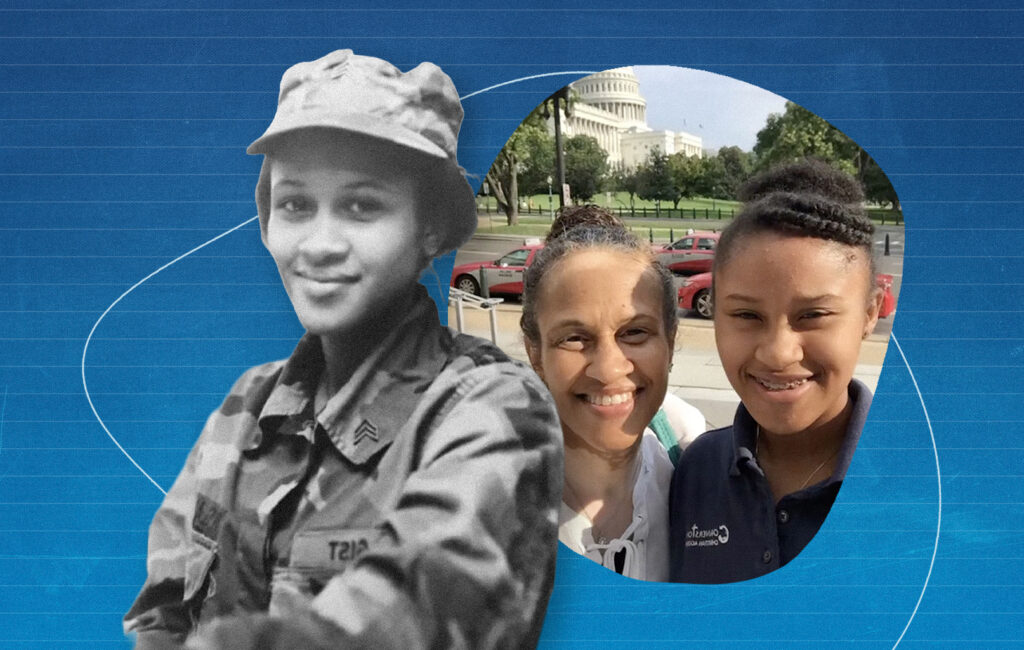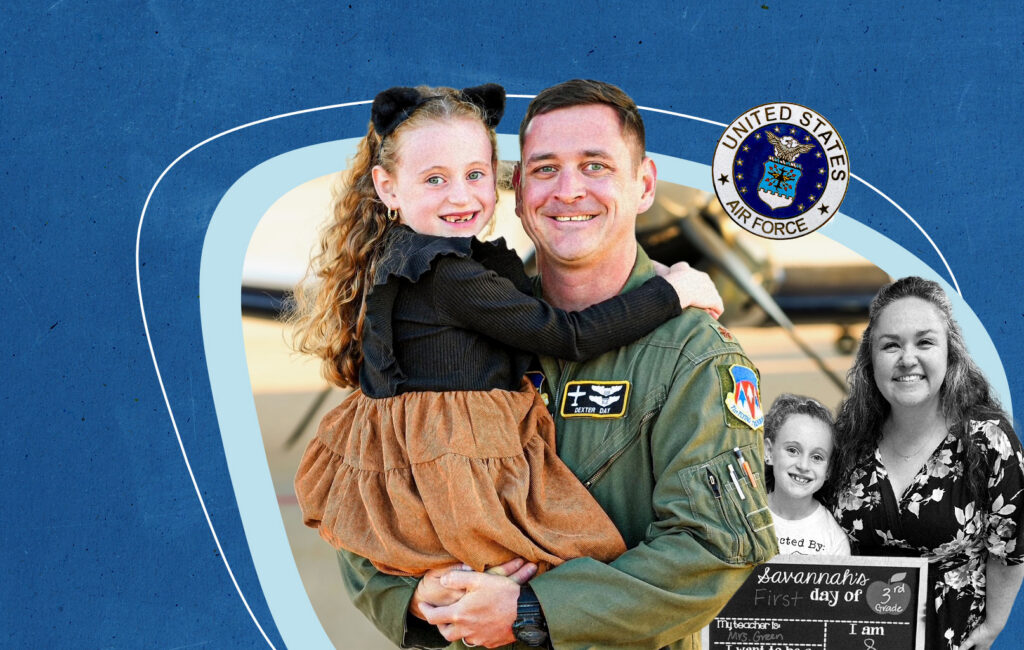
For military families, sacrifice is constant. School choice and the Education Freedom Tax Credit can make sure their children still have access to the education they deserve.
Carol Day knows what it means to give something up for the sake of service.
As a military spouse, her family has relocated more times than she can easily count. She has left behind jobs, community, proximity to family, and the comfort of stability. That is just the nature of military life. You make the sacrifice because you believe in something larger than yourself.
But when it came to her daughter Savannah’s education, Carol wasn’t willing to sacrifice that too.
What Military Families Give Up When They Give So Much
Military families don’t choose where they live. The branch does. And when you end up in a small town, you take what the local school system offers — or you figure out another way.
Carol’s family ended up in a small Oklahoma town. The public options available weren’t the right fit for Savannah. Private school was the answer Carol could see — but on a military family’s income, it wasn’t the answer she could afford.
“Life was rough. Finances were rough,” she explains simply. It wasn’t complicated. It was just the math of military life.

Be the First to Know
Get notified when the Education Freedom Tax Credit launches so you don’t miss the opportunity to support K–12 students while benefiting from a federal tax credit.
Preparing Students for More Than Graduation
What Carol found when she was finally able to enroll Savannah wasn’t just a classroom. It was an administrator named Mr. Martin who looked at her daughter and saw someone worth investing in.
“Mr. Martin really looked at Savannah as a whole person,” Carol says. He wasn’t just managing a student. He was preparing a young woman for what comes after school.
That kind of attention — the individual investment in a child’s future — is not something you can manufacture in an overcrowded classroom where the system is stretched thin. It requires the right environment. And for Savannah, that environment was only accessible because of a scholarship.
Community Stepped In, But Families Shouldn’t Have to Hope for That
Carol is grateful. She says that plainly. The community that helped make Savannah’s education possible came through when her family needed it most.
But she’s also honest about something: no family should have to depend on luck, charity, or connections to get their child into the right school. The opportunity to choose should be built into the system — not granted on a case-by-case basis to the families fortunate enough to find it.
“The tax credit gives us that opportunity to be here in a small town and focus on building a family.”
More Than a School: A Foundation for Family
The scholarship didn’t just change Savannah’s academic trajectory. It changed what was possible for the whole family.
Military life is defined by instability. You hold on to what you can. For Carol’s family, knowing Savannah was in the right school — that she was being seen, invested in, and prepared for her future — gave them something solid to hold onto in the middle of everything else that moves.
“The tax credit gives us that opportunity to be here in a small town and focus on building a family,” Carol says.
That is not a small thing. For a military family that has given so much, a stable foundation matters enormously.
How the Education Freedom Tax Credit Expands School Choice for Families Like Savannah’s
The Education Freedom Tax Credit, launching in 2027, will dramatically expand what is possible for families like Carol’s. By increasing the pool of scholarship funding available, the EFTC ensures that more parents — regardless of zip code, income level, or how many times the military has moved them — can access the schools that truly serve their children.
Eligible donors can receive a dollar-for-dollar federal tax credit of up to $1,700 when they contribute to a qualifying K–12 scholarship organization. Any amount above $1,700 is treated as a standard 501(c)(3) charitable deduction. There is no cap on how much you can give.
Every Family Who Serves Deserves the Freedom to Choose
Military families sacrifice enough. They should not have to sacrifice their children’s access to the right education on top of everything else.
Carol Day found a way. The EFTC will make sure more families like hers can find one too.