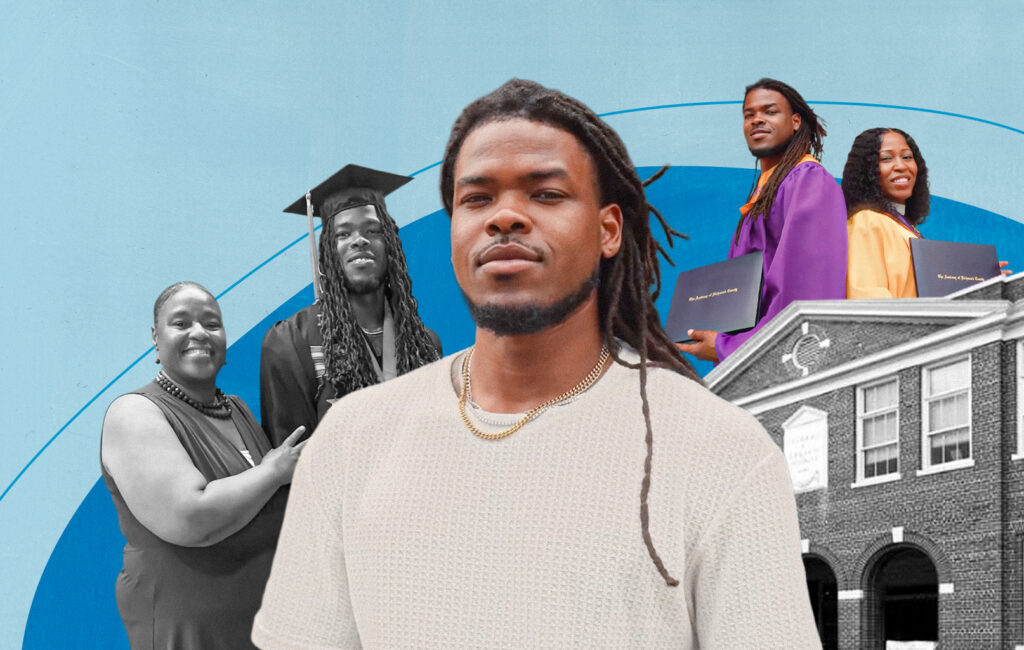
Every parent wants their child to have a real shot at life, not just good grades, but the kind of foundation that lets them choose their own path instead of having it chosen for them.
For Allen Thompson’s mother, giving her two children that shot meant years of early mornings, two separate school runs, and a level of persistence her son wouldn’t fully understand until years later.
Waitlisted for Four Years
Allen’s mother believed the public magnet school system was the best shot her two kids had at a strong education. So, she applied for both of them.
His sister got in. Allen didn’t.
The Mornings Before the Wait Ended
For years, Allen’s mother took her two children to two different schools, every single day, and made sure it happened without skipping a beat.
She woke up at 4:30 every morning. She drove the school bus herself, the same route that served the school Allen attended, and he rode up front with her. His sister switched buses along the way to reach the magnet school.
“She sacrificed so much just making sure that we got the education we deserve,” Allen says.
“I didn’t know what an advocate was, but she definitely instilled what it means to sacrifice.”
Getting In and Falling Behind
But finally, in fifth grade, Allen’s wait ended.
He got in and almost immediately he understood why his mother had never been satisfied with the public school he’d been attending.
But despite the much-anticipated wait, the transition wasn’t easy.
Allen struggled, and the struggle chipped away at how he saw himself. He compared himself to his sister, who’d already found her footing in the program, and started to feel like he didn’t measure up, that he wasn’t good enough, and that he might not make it.
“I got on my knees and begged my mom not to make me go, but she did. And it wasn’t long before I got my first F,” Allen recalled of his early days.
Built Back Up
Allen’s sister watched his confidence drop and decided it was on her to help fix it.
“I saw his confidence drop tremendously,” she says. “So for me, it was my duty as a sibling to make sure, first and foremost, we built him back up.”
She and their mother worked at it constantly. His sister helped him with schoolwork on top of her own, night after night, until the difference between his old school and his new one became impossible to ignore. That first F eventually became a B.
Be the First to Know
Get notified when the Education Freedom Tax Credit launches so you don’t miss the opportunity to support K–12 students while benefiting from a federal tax credit.
But Allen didn’t just recover. He finished the program with more confidence than he’d started with.
From Waitlist to Whiteboard
By the time Allen entered high school, his grades had caught up. He followed his sister into the magnet program fully, becoming a student athlete and taking on advanced coursework.
The same opportunities that had once felt out of reach.
Fast forward to today and Allen has come full circle. He is now a sixth-grade teacher supporting students who were in a similar situation at his age.
“Allen is a sixth-grade teacher,” his sister says.
“He’s invested in students. He’s given students the confidence. He’s given students the academic challenges that he was not given when he was attending public school.”
What Allen’s Story Makes Clear
Looking back, Allen doesn’t hesitate when describing the gap between the two schools he attended.
“The difference in the education between the magnet school program and the public program is life itself,” he says.
“I think about all of my friends who never got to go to a magnet school, stayed in that struggling school, and stayed years behind. I think that magnet school kind of almost saved my life in a way.”
That’s the part of his story he wants other kids to hear most.
“Every child should have a choice,” he says.
“One thing in life that a lot of people do is strip that away from children, and tell them what they’re going to do, when life is full of choices and you need to learn as soon as possible how to make those choices.”
Allen’s family got their answer after four years on a waitlist and a mother willing to run two school routes a day to make it work. Not every family has four years to wait, and not every family has a seat to wait for in the first place. Access to a quality education should never depend on a family’s ZIP code or on how long a family can hold out for a lottery number to come up.
The Education Freedom Tax Credit (EFTC), launching in 2027, is built to close that gap on a national scale.
When eligible donors give to a qualified Scholarship Granting Organization (SGO), they receive a dollar-for-dollar federal tax credit: up to $1,700 for individuals, or up to $3,400 for married couples filing jointly. You give first; the credit reduces your federal tax bill when you file. The credit is the entry point, not the limit. You can give more, and the amount above the credit is treated like any other charitable contribution under the usual tax rules.
More donors funding more scholarships means more families can choose the learning environment that fits their child, without needing four years, a lucky draw, or a parent who happens to also drive the bus.
A scholarship can help turn a waitlist into a classroom. Donors make the scholarship possible and the EFTC makes the donors possible for every Allen may still be waiting for his turn.
Every family has a story like this one. See more stories of students and families whose lives changed through school choice.