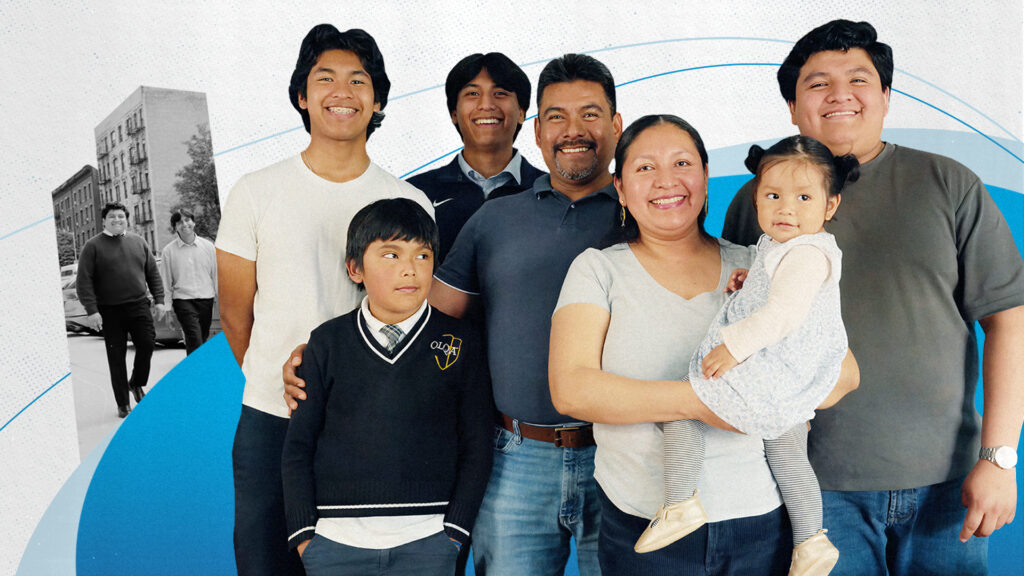
Some parents want their kids to have an education. Antoine and Manny’s parents needed an education but never got the chance to finish one. That didn’t stop them from building their whole lives around getting it for their sons.
A Sixth-Grade Education and a Promise to Their Kids
Antoine and Manny’s parents both immigrated from Mexico. Neither finished sixth grade. They went to elementary school and then went straight to work, and that was the whole of their formal education.
That history is exactly why they pushed their sons toward school, hard, from the beginning. Their parents didn’t just encourage an education. They enforced it.
Getting Lost in the South Bronx
Growing up in the South Bronx, Antoine says pursuing an education wasn’t really the norm around him.
“Nobody wants to really pursue too much education,” he says of the neighborhood he grew up in.
Manny didn’t take to it either, at first. He played around during class, tuned out, and got in trouble constantly. He was a regular in the principal’s office, and it was clear his parents’ plan for him wasn’t going to work inside his public school.
A Move That Didn’t Fix Anything, at First
Antoine’s mother started working. His father was already working constantly. Together, they were building toward one goal: a better education for their sons, even if it meant a private Catholic school they could barely afford.
They enrolled the boys, and the change didn’t go the way anyone hoped. Antoine’s grades plummeted. Teachers singled him out, other students picked on him, and the new school never felt like it was his.
“I remember telling my parents, especially my mom, that I didn’t want to go, that I always wanted to be taken back to my old school,” Manny says.
Finding the right school wasn’t going to be a single decision. It was going to take years.
One Scholarship Short
Antoine’s parents set their sights on a different Catholic school, Our Lady Queen of Angels. But Manny’s grades didn’t qualify him for the scholarship the school offered, and without it, the family couldn’t afford to send him.
Some states run programs that help low-performing students access financial aid so they can find a better academic fit. New York didn’t have one.
The family’s finances left no room to make up the difference. Antoine and Manny’s parents knew from the start they couldn’t cover private school tuition on their own. The scholarship wasn’t a nice option. It was the only way in.
Setting the Pathway for Each Other
Antoine felt the weight of that shortfall. As the older brother, he wanted to set a foundation the rest of his brothers could follow.
He put in the work, moving his grades from C’s to B’s, and it paid off. He earned a scholarship through a church-affiliated scholarship fund.
Watching his brother earn that scholarship changed something for Manny, too. Seeing Antoine turn his grades around was proof it could be done.
Be the First to Know
Get notified when the Education Freedom Tax Credit launches so you don’t miss the opportunity to support K–12 students while benefiting from a federal tax credit.
“That pushed me so much more to actually put in my effort and hard work,” Manny says of the two of them pushing each other forward.
“I knew that if he can do it, I can most definitely do it.”
Finally, the Right Fit
Antoine and Manny both got into Our Lady Queen of Angels, and the difference was immediate.
“We felt a complete change in environment,” Manny says.
For the first time, it felt like the school actually cared, that teachers invested time in getting to know him, his background, and where he wanted to go in life.
Where They Are Today
Antoine is now a first-generation college student, pursuing a computer science degree at Fordham University.
Manny is studying at Syracuse.
“Each sibling is doing better and better, all because of education, and because my parents fought for better,” Antoine says.
Looking back, Manny doesn’t think he would have ended up here if his parents had never fought for a different school.
“I would have never guessed or imagined that I would be sitting here where I am if I continued in the public school system,” he says.
“It’s all because of school choice, and because of all the sacrifices my parents made, and other factors.”
What Antoine Wants Other Families to Know
Antoine’s parents worked constantly, gave up more than most people ever see, and still came up short of what tuition cost until a scholarship closed the gap. That shouldn’t be the bar a family has to clear to get their kids into the right classroom.
“No child, no family, no person should have to choose between good school and paying the bills,” Antoine says.
Access to the right school shouldn’t hinge on whether a family happens to live in a state that helps low-performing students find aid, or on whether an older sibling manages to raise his grades in time to open the door for the ones behind him. The Education Freedom Tax Credit (EFTC), launching in 2027, is built to make that kind of scholarship access available nationwide.
When eligible donors give to a qualified Scholarship Granting Organization (SGO), they receive a dollar-for-dollar federal tax credit: up to $1,700 for individuals, or up to $3,400 for married couples filing jointly. You give first; the credit reduces your federal tax bill when you file. The credit is the entry point, not the limit. You can give more, and the amount above the credit is treated like any other charitable contribution under the usual tax rules.
More donors funding more scholarships means more families like Antoine and Manny’s can find the school that actually fits their kids, without waiting on which state they happen to live in, or which sibling manages to raise his grades first.
A scholarship gave Antoine and Manny a shot their parents’ hard work alone couldn’t buy. Donors make the scholarship possible, and the EFTC makes the donors possible for every family still working to set the pathway for the kids who come next.
Every family has a story like this one. See more stories of students and families whose lives changed through school choice.