
One mother’s belief—and the power of school choice—set Mya on a path to one of the top boarding schools in the country.
At first, Mya didn’t want to go. “My mom found out about WSG, not me,” she says. “At first, I wasn’t really liking the idea.” Like many students, she was comfortable where she was, and change felt uncertain. But her mother saw something more—something Mya hadn’t fully discovered yet.
“She knew I had that leadership aspect in me. It just needed to be opened more.”
That belief—and the power of school choice—led her family to the Washington School for Girls (WSG).
When School Choice Unlocks Potential
At her previous school, Mya’s potential was there, but it hadn’t fully taken shape. Her mom believed a different environment could make the difference, and through school choice, she was able to explore options beyond the default assignment and find a school that matched her daughter’s needs.
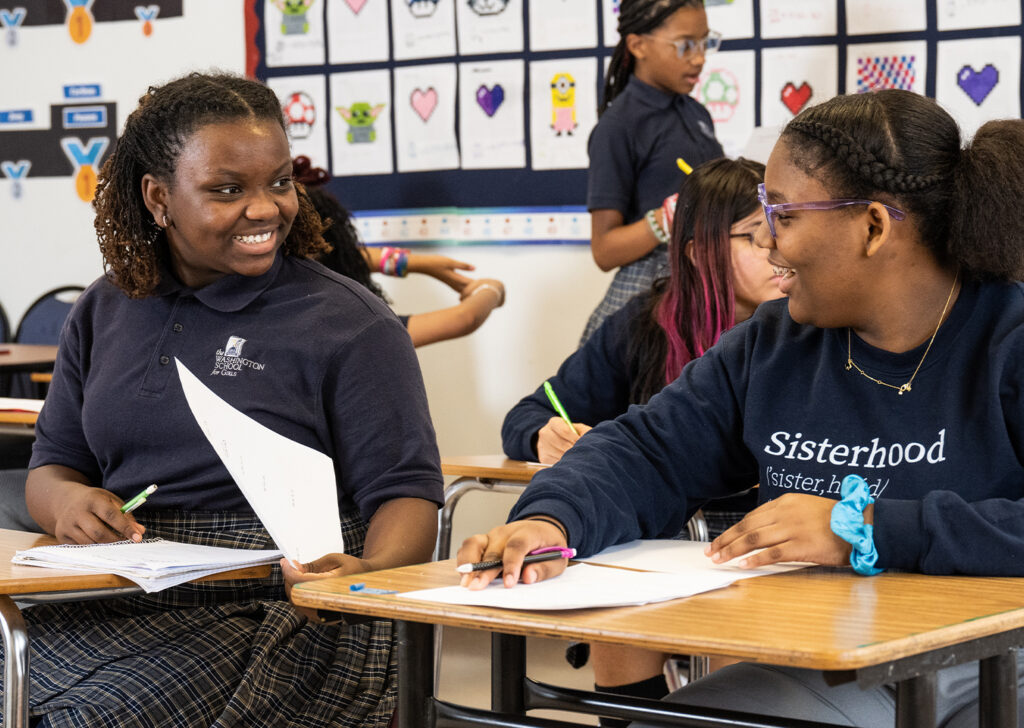
“And I think she knew that WSG would be the best place for me to be more open to new things and really find myself as a person,” Mya says. At WSG, that transformation began to take hold.
Be the First to Know
Get notified when the Education Freedom Tax Credit launches so you don’t miss the opportunity to support K–12 students while benefiting from a federal tax credit.
A School Built on Opportunity
“Mya is an amazing eighth grade student,” one school leader shares. “She has taken the opportunity to really lean into all of the activities and opportunities that the school offers.”
Those opportunities are what make schools like WSG so powerful. “My favorite thing about this school is the opportunities they present,” Mya says. “They open me up to experience new things—like going to Thailand, playing the piano, and learning basketball.”
From partnerships with organizations like the Boys and Girls Club and the Levine School of Music to extracurricular and cultural experiences, WSG helps students grow far beyond the classroom. This is what school choice makes possible: access to environments where students can explore, grow, and lead.
Finding Confidence—and a Future
Over time, Mya began to see herself differently. “She really deepened her own leadership within herself and found her voice,” her teacher explains. That growth didn’t just change her present—it reshaped her future.
“Well, I’m going to one of the top five boarding schools in the USA,” Mya says. What once may have felt out of reach is now her reality.
Why School Choice and K–12 Scholarships Matter
Mya’s story reflects what happens when families are given real educational options. For many families, access to schools like the Washington School for Girls depends on financial support—and that’s where K–12 scholarships come in. Scholarships make school choice accessible—not just theoretical—ensuring families can choose the school that works best for their child, regardless of income or zip code.
Expanding School Choice Through the Education Freedom Tax Credit
Beginning January 1, 2027, more families will be able to access opportunities like Mya’s through the Education Freedom Tax Credit (EFTC). When eligible donors give to a qualified Scholarship Granting Organization (SGO), they receive a dollar-for-dollar federal tax credit: up to $1,700 for individuals, or up to $3,400 for married couples filing jointly. You give first; the credit reduces your federal tax bill when you file. The credit is the entry point, not the limit. You can give more, and the amount above the credit is treated like any other charitable contribution under the usual tax rules.
Those contributions fund K–12 scholarships, expanding school choice nationwide. This means more families can access the right school, more students can find environments where they thrive, and more stories like Mya’s become possible.
The Power of One Choice
Mya didn’t choose WSG at first—her mom did. But that one decision, made possible through school choice, changed everything. It opened doors, built confidence, and set her on a path to one of the top boarding schools in the country.
That’s the impact of school choice, and that’s what expanding K–12 scholarships through the Education Freedom Tax Credit can do for millions more students.
Students like Mya thrive when families have the freedom to choose the right school. Through the AFC Scholarship Fund, donors can help expand school choice by supporting K–12 scholarships for students across the country.